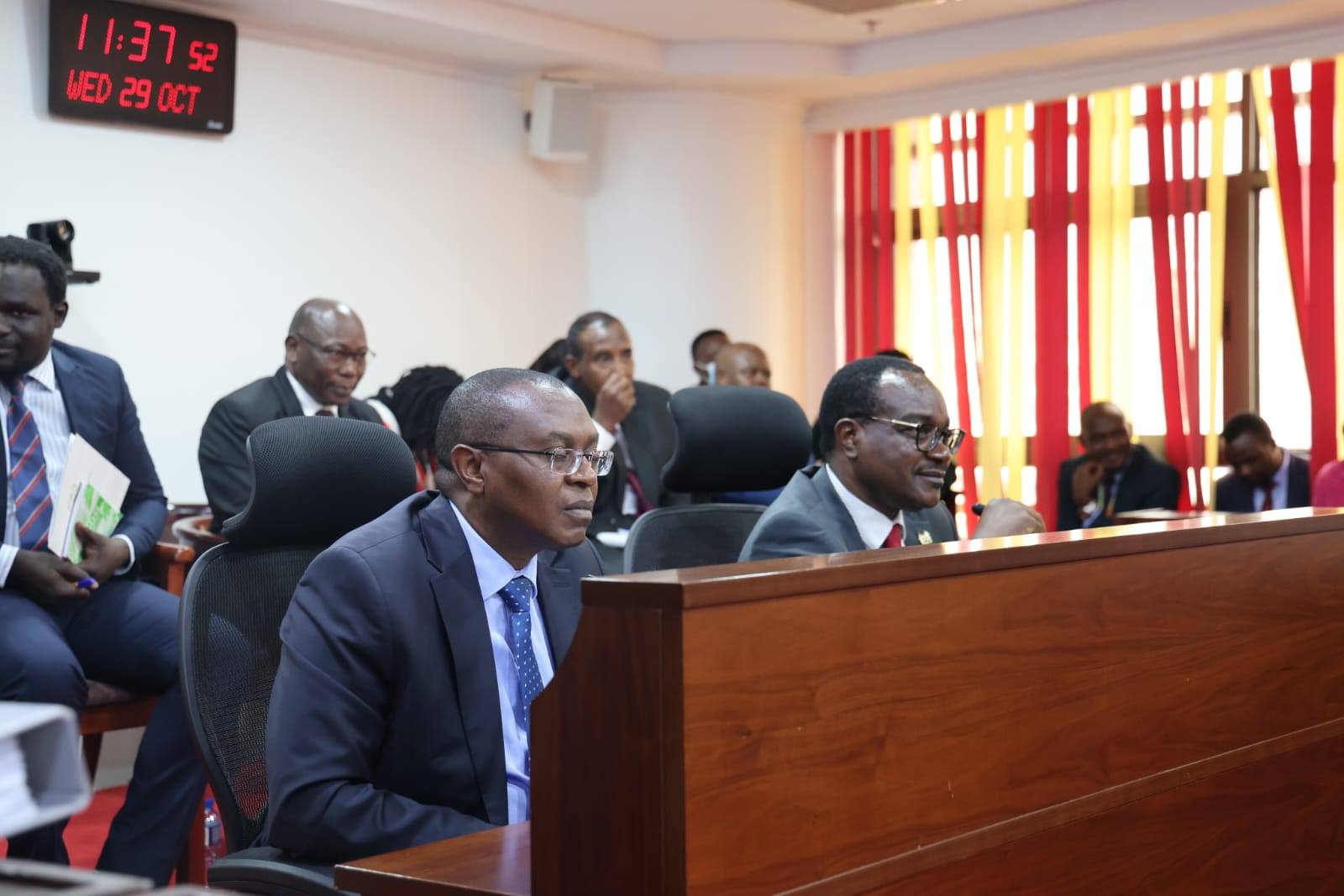
Thousands of schools have now been approved for capitation after weeks of verification, even as a national audit continues to expose major gaps in school records, inflated enrolment numbers and ghost institutions across the country.
The latest findings show that officials are dealing with a widespread data crisis that has affected the allocation of education funds for years.
According to the Ministry of Education, 44,495 schools have so far been cleared after submitting verifiable information. At the same time, the audit has already uncovered 87,000 ghost learners and identified 10 schools in 10 counties that have no learners at all, raising fresh questions about how nearly Sh1 billion in capitation was previously released without proper checks.
The Auditor General had earlier flagged more than Sh4 billion lost in the past four years due to falsified enrolment figures.
Education Cabinet Secretary Julius Ogamba said the findings point to a pattern of deliberate manipulation, with some officers inflating numbers to access funds.
“We have so far uncovered 87,000 ghost learners in public schools. The government will take action against individuals who inflated enrolment figures. Heads must roll,” Ogamba said.
He explained that schools with questionable data are being inspected physically and warned that the ministry cannot issue capitation until all figures match internal records.
“We do not want to condemn people falsely,” he said, adding that close to Sh1 billion has not been released because reported figures raise doubts.
Ogamba said the verification has exposed intentional over-reporting of learners and that the findings will be forwarded to investigative agencies. He stressed that the ministry sends teams to schools whenever inconsistencies appear.
“We do not want to incriminate people wrongly,” he said, insisting that the audit is meant to clean up records and stop misuse of public money.
Oversight challenges have contributed to the problem, with only 600 Quality Assurance Officers and 200 auditors handling more than 53,000 basic learning institutions. In some areas, lack of transport has made routine monitoring difficult.
As of November 10, 246 primary and 102 junior schools had not updated their enrolment details. Basic Education Director General Elyas Abdi said these schools will be isolated for fresh inspections. Principal Secretary Julius Bitok urged institutions to keep accurate records, saying the exercise will help schools receive capitation on time.
“The verification exercise is set to confirm the number of students, the number of schools, and the status of our schools… This will ensure that starting next term, we receive our capitation on time, without any delays,” Bitok said.
Ogamba dismissed claims of higher over-enrolment, saying the official audit will be finalised after thorough checks. He noted that the completion of the report has been pushed forward several times since the verification began on September 5, 2025. Kenya Primary Schools Heads Association chairperson Fuad Ali said head teachers should not be blamed before the process ends, citing problems with Nemis.
“There was a problem in Nemis. When we uploaded learner numbers, the capitation we received was always lower. Those errors did not come from us,” he said, adding that the shift to Kemis has addressed most challenges.
On November 5, National Assembly Speaker Moses Wetang’ula called on Ogamba to take decisive action against ministry officers who allowed funds to reach ghost schools.
“You have officers in your ministry in every county… Public funds have been wired to non-existent schools for non-existent learners. How many officers have you interdicted for this criminal act?” he asked.
Ogamba said any action must wait until the audit is complete.
“We have not interdicted anybody because we have not completed the analysis of the exercise… Criminal culpability can only be taken by investigative agencies. But we will take administrative actions against officers whom we find culpable,” he said.
MPs pressed the ministry to move faster, saying the fraud is clear. Suba North MP Millie Odhiambo asked why the culprits had not been identified.
“Why is it taking so long to trace them? You have found non-existent schools… just pinpoint who paid money to these ghost institutions and throw them out of office,” she said.
Kitui South MP Rachael Nyamai warned that Sh1.1 billion may have been paid out wrongly, adding that a cartel could be hiding the truth. Kilifi North MP Owen Baya said long-serving officers have shielded loopholes for years and called for a “radical surgery” in the ministry.
Ogamba asked Parliament for two more months to conclude the exercise, arguing that rushing could expose the ministry to legal battles. The discrepancies, he said, stem from data submitted in wrong formats or with incorrect identification codes.
The verification is running through three digital platforms, allowing the ministry to compare school-level data with sub-county records.
Any mismatch triggers another round of checks. Teams are reviewing enrolment totals, school identification codes, bank details, assessment numbers and GPS coordinates.
So far, 4,555 schools with incorrect submissions have received half of their earlier allocations, while 1,005 schools either submitted wrong data or failed to submit at all. Some schools sent pictures instead of required documents, highlighting digital literacy gaps.
The ministry is still verifying records in Mombasa for another seven days. It also found 2,145 primary schools below the minimum enrolment of 45 learners.
Ten schools with zero learners have since been shut down. The audit is expected to clear out ghost institutions and ensure capitation reaches genuine schools as the government rolls out the Comprehensive Schools structure.































Comments
Sign in with Google to comment, reply, and like comments.
Continue with Google